
Why ECOFILM TPU Paint Protection Film Resists Yellowing for Years While Ordinary PPF Fades Fast
Why Do Some ECOFILM TPU Paint Protection Films Yellow in One Year While Others Stay Clear and Glossy for Five Years?
Many car owners feel puzzled after applying paint protection film (PPF): even when the film is labeled TPU, prices vary widely and real-world performance differs dramatically. Some films turn yellow and hazy within just one year, dulling the paint; other high-quality films remain clear and bright after years of sun, rain, wind and frost, protecting the original paintwork beautifully.
Private car owners planning to wrap their vehicles, long-term wholesale buyers, and installation shops can all be misled by the crowded marketing claims on the market. Many compare only the price and overlook the underlying differences in materials. In fact, a film resistance to yellowing is decided at the raw material selection stage. Through long-term research, development and production of film materials, ECOFILM has kept focusing on this industry pain point, breaking down the logic behind yellowing at the molecular level to help buyers avoid common pitfalls.
The Root Cause of Yellowing: Inherent Differences in Molecular Structure
TPU, or thermoplastic polyurethane elastomer, is a broad polymer system. The TPU used in paint protection film is mainly divided into two categories: aromatic TPU and aliphatic TPU. Their raw material formulations and molecular structures are completely different, leading to a clear gap in yellowing resistance.
1. Aromatic TPU: Prone to Yellowing by Nature
Aromatic TPU is made from aromatic isocyanates such as MDI and TDI, with benzene ring structures in its molecular chains. This structure is highly sensitive to UV light. Under prolonged outdoor sunlight, oxidation and chain breakage occur, producing quinone-imine color-forming substances, and the film gradually shifts from transparent toward yellow. Even adding large amounts of antioxidants and UV absorbers to the formula can only slow down yellowing; it cannot stop aging and yellowing at the source. This is the core reason low-cost films turn yellow quickly.
2. Aliphatic TPU: Suppressing Yellowing at the Source
Aliphatic TPU is synthesized from aliphatic isocyanates such as HDI and H12-MDI, and contains no benzene rings in its structure. UV energy can hardly break its stable chemical bonds, so under natural conditions the chance of photo-oxidation forming color groups is extremely low, giving it inherently excellent anti-yellowing performance. This is why high-end PPF generally chooses aliphatic TPU substrate: it removes the main cause of yellowing at the molecular level and keeps a clear appearance over long-term use.
II. Aliphatic TPU Is Not a Cure-All: Three Factors Together Determine Durability
Many people assume that any aliphatic TPU film will never yellow, but this view is not rigorous. For long-lasting, stable anti-yellowing performance, substrate purity, polyol system, and surface coating protection are all indispensable; they work together to determine the film service life.
1. Substrate Purity: The Foundation of Stable Performance
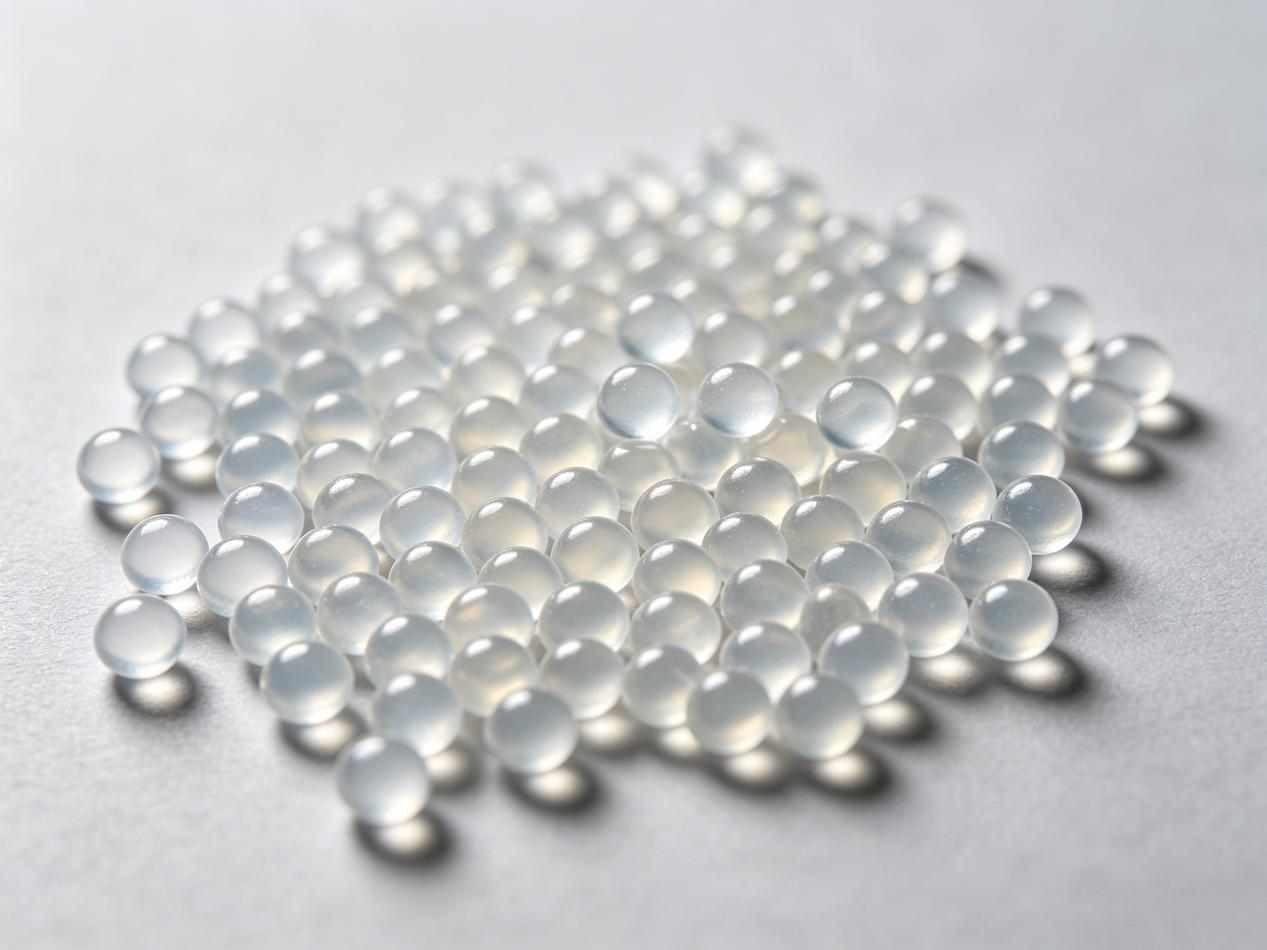
Raw material purity directly affects weather resistance. Low-grade materials leave residual small-molecule monomers, oligomers and various impurities, which are weak points in aging reactions and accelerate oxidation and loss of gloss. High-quality films use high-purity aliphatic TPU pellets with even molecular distribution and low impurity content, delivering stable yellowing resistance along with better light transmittance and gloss. At ECOFILM, every batch of substrate undergoes spectral analysis during incoming inspection to control raw material purity and reduce aging risks caused by impurities at the source.
2. Polyol System: Balancing Multiple Performance Needs
By soft-segment composition, TPU is divided into polyether-type, standard polyester-type, and polycaprolactone-type. Each system has its own strengths and weaknesses in hydrolysis resistance, weather resistance and mechanical properties: polyether excels in hydrolysis resistance but has weaker thermal stability under long-term high temperature; standard polyester offers good gloss but tends to hydrolyze and break under high temperature and humidity; polycaprolactone is better balanced, with high wear resistance while maintaining hydrolysis resistance and mechanical properties, and is the preferred system for high-end films today.
3. Surface Functional Coating: The First Barrier Against Aging
Many buyers focus only on the base film material and overlook the surface coating. A high-quality functional coating, besides offering practical hydrophobic and self-healing properties, blocks UV light, acid rain and corrosive substances from directly contacting the base film, like a protective outer layer over the TPU substrate. If the coating is poorly dense or has weak adhesion to the base film, UV and corrosive substances penetrate the TPU layer and accelerate yellowing and aging; a high-performance coating greatly extends the base film life and sustains its anti-yellowing advantages.
III. A Reliable Film Depends on Standardized Quality Control and Testing
Choosing the right material system is only the first step. Stable production control and strict testing ensure every roll performs consistently, so there is no uneven quality within the same batch.
1. Incoming Raw Material Inspection: Control at the Source
A formal film factory starts quality control from raw material intake. Each batch is verified for physical properties and tested by spectroscopy to confirm substrate purity, rejecting substandard materials and blocking risks before production. ECOFILM PPF line follows the same rigorous raw material verification process to guarantee the base quality delivered to wholesalers, shops and individual car owners.
2. Third-Party Testing: Stability Proven by Data
Reliable products pass third-party authoritative xenon-lamp aging tests, simulating intense outdoor sun exposure and recording changes after long-term aging. They avoid inflated parameters and prove stability under extreme light conditions with real test data.
3. Continuous Research and Development: Adapting to Diverse Scenarios
Brands with in-house labs or joint research centers keep running aging and weather tests on new products and continuously optimize formulations, so the film adapts to different climates across the country, whether the hot, humid and rainy South or the strong-UV North, and delivers stable protection.
IV. Buying Summary for Car Owners, Wholesalers and Installation Shops
PPF is essentially a long-term physical protective layer for the original paint. Its durability results from the combined interplay of substrate formulation, coating system and production process. For private owners, do not choose based solely on price or influencer recommendations; confirm the substrate type and test reports first. For wholesalers, prioritize sources with stable quality control and mature formulations to reduce after-sales disputes.
For installation shops, understanding material differences lets you give customers objective, professional advice.
A quality TPU film requires continued dedication to materials science. Only by balancing molecular structure, raw material purity and coating protection, backed by stable and strict quality control, can a film stay clear and new after years and protect your car paint for the long term.
For more information, please visit our official website at www.ecofilm.com.cn
WhatsAPP:+86 156 1875 8024 (WeChat & WhatsApp available)
Email: Louis@ecofilm.com.cn


